Dr. Silvia Mejia-Arango
Biography
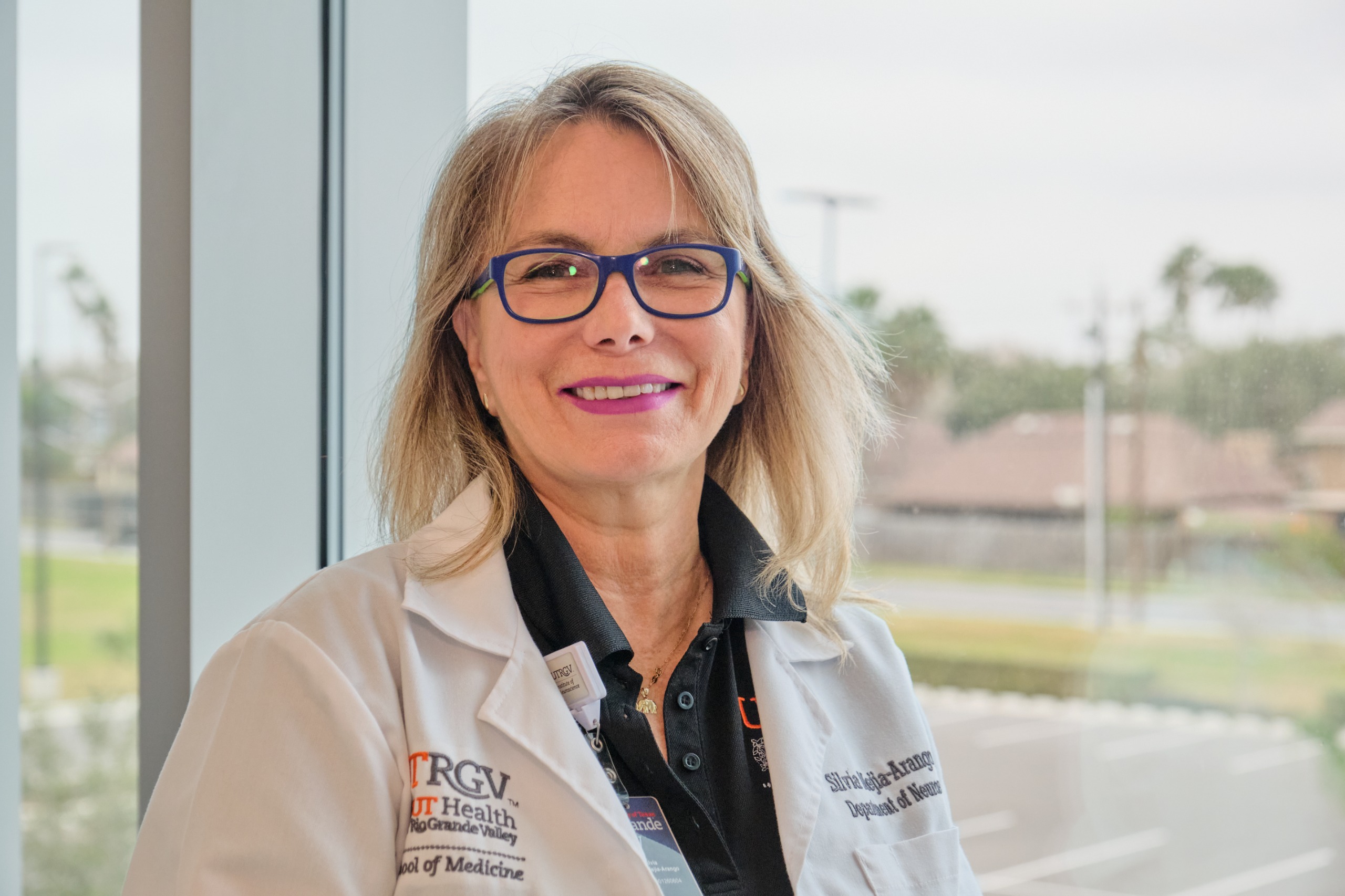
Dr. Silvia Mejia-Arango, an Assistant Professor at the Memory and Aging Center in the School of Medicine, Institute of Neuroscience at the University of Texas Rio Grande Valley (UTRGV). She is the Clinical Core leader of the South Texas Alzheimer’s Disease Research Center at UTRGV and part of the Administrative Core of the Rio Grande Valley Alzheimer´s Resource Center for Minority Aging Research: Partnerships for Progress. Additionally, she is a Co-Investigator of the Mexican Health and Aging Study (MHAS) and its Cognitive ancillary study (HCAP-Mex-Cog), and PI for the study: Advancing cross-national research on aging and cognitive function: English/Spanish courses with the Mexican Health and Aging Study and HRS/HCAP global partner studies. She completed my bachelor’s degree in psychology at the University of San Buenaventura in Medellin, Colombia, and a clinical internship at the North University of Barranquilla, also in Colombia. She completed a master’s degree in Psychobiology and earned a doctorate in Neuroscience (Neuropsychology track) from the National Autonomous University of Mexico.
Dr. Silvia Mejia-Arango’s research focuses on cognitive aging, with particular emphasis on cognitive assessment, cognitive status classification, and the influence of contextual and health-related risk factors on cognitive impairment and dementia among minority populations. Drawing on expertise in population neuroscience and clinical research, she has led community-engaged clinical research initiatives in the Rio Grande Valley, a region with a large population of historically underserved Hispanic residents and have produced robust estimates of the prevalence of dementia and mild cognitive impairment (MCI) among Mexican and Mexican American populations identifying key contextual and cardiometabolic factors contributing to cognitive health disparities in these communities. More broadly, she aims to provide a national perspective on disease burden, illuminate disparities in cognitive aging, and support healthcare planning, early detection, and targeted prevention strategies.